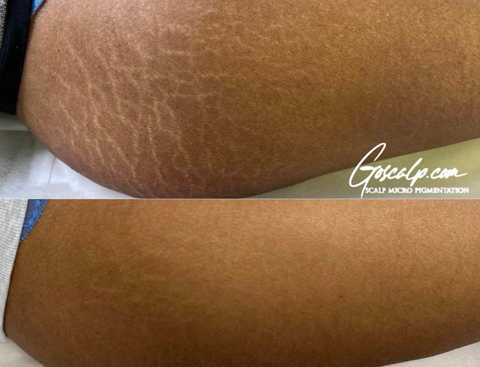
Why Stretch Mark Tattoo Cover Ups Can Reduce the Look of Scars Fast
By Goscalp Scalp Micropigmentation Hair Loss Center & Laser Tattoo Removal | August 11, 2026
We hear it all the time about micropigmentation: "well worth it" and people are glad they trusted Michael with something that affects their confidence. That same mindset is why stretch mark tattoo cover ups are such a big deal. Stretch Mark Cover-up’s reduce the visible contrast of stretch marks by implanting pigment that blends the mark with the surrounding skin. It’s immediate color-correction, not a texture fix. If you’re in Stonecrest and you’re looking for a real difference you can see, often in 1–3 sessions, this is one of the fastest confidence-boosters we do.
Stretch marks don’t usually bother you because they’re there. They bother you because they catch the light, show through certain fabrics, and pop in photos. Our Stretch Mark Cover-up’s are built for that exact problem. We work right near Stonecrest Town Center and the Stonecrest Concourse commercial district, and we see a lot of people planning around pool days, vacations, and that hot, humid Georgia summer that makes you want to wear less and live more. People also drive in from Lithonia, Stone Mountain, Decatur, Conyers, Snellville, and Atlanta because this kind of camouflaging takes a careful eye for color. If you’re trying to soften the look of older white stretch marks or calm down the contrast of newer red or purple ones, we’ll talk you through what’s realistic and how quickly you’ll see it.
Stretch Mark Cover-up’s = color blending, not texture repair
Let’s keep this honest. Stretch mark cover up tattoo work is about camouflage. We implant pigment to reduce the contrast between the stretch mark and your surrounding skin tone. That’s why people often see a change fast, because you’re not waiting on your body to rebuild collagen or remodel the area.
Our service uses paramedical body tattooing and microneedling-style techniques with tiny needles to replicate natural-looking skin pigmentation. This is different than decorative tattooing that covers the whole area with a design. If your goal is a butterfly or a full piece, that’s a different conversation. If your goal is hiding stretch marks with tattoo pigment that looks like skin, we focus on careful color selection, subtle layering, and letting the skin heal and settle between sessions.
Quick reality check: you’ll usually see the biggest improvement in how noticeable the marks are at normal viewing distance. If the stretch marks are raised or indented, this doesn’t flatten them.
The real payoff of stretch mark tattoo cover ups: faster confidence in photos
People don’t book this because they’re bored. They book it because they’re tired of adjusting their life around a few lines on the skin. The biggest benefit is simple: we reduce the color contrast, so your eye doesn’t go straight to the stretch marks first.
1–3 sessions, with the biggest change showing up early
Most people notice a clear improvement after 1–3 sessions. Newer red or purple marks often respond quicker than older white ones. Older marks can still improve a lot, they just tend to need more layering and patience.
A plan that respects Georgia sun and August swim season
Stonecrest summers are no joke. Heat, humidity, and sun exposure can all complicate healing. We’ll help you time your sessions so you’re not doing fresh pigment work right before a beach trip or a weekend outside. After each session, you’ll want to avoid tanning and heavy sun for weeks so the pigment doesn’t heal lighter, darker, or uneven.
Color matching that looks like skin, not makeup
Good camouflaging is subtle. We aim for a blend that doesn’t scream “tattoo.” That means careful color-matching and, for many skin tones, a patch test so we can see how your skin heals and how the color settles.
"Great experience. Brought me alot more confidence and it wasn't as painful as most believe. I'm glad I did it."
one of our first-time visitors
Timeline you can plan around: you’ll see a change right away, but the color typically settles as the skin heals. Give it 4–8 weeks to judge the true blended result before deciding what the next session should do.
Is a tattoo cover up on stretch marks the right move for you?
This is a great fit if your stretch marks are what we call “high contrast, ” meaning they stand out against your surrounding skin tone. It’s also a strong option if you’ve been thinking about something permanent but you want it to look natural and low-key.
People who like this service tend to be the same people who tell us our micropigmentation work was “money well spent” and that we took time to explain everything. If you’re the type who has questions and wants straight answers before you commit, you’ll feel right at home.
Our Stonecrest approach: patient color work, clear answers, and time to get it right
We’ve been doing this work in Stonecrest for 13 years, and our reputation comes from the same things people mention again and again: we listen, we’re detail-oriented, and we don’t rush the parts that matter.
A lot of our new bookings come from referrals. People come in skeptical, ask a ton of questions, and leave feeling calmer because we explain the process in plain language. And during the work, we pay attention to comfort. As one client put it, the numbing cream can make a big difference.
"Going in, I was very skeptical as I did not know what to expect. Mike made me feel comfortable answering all my questions and concerns."
one of our regulars
If you’re thinking about Stretch Mark Cover-up’s, start with a consult so we can look at the stretch marks in real lighting, talk about timing around sun exposure, and map out a realistic session count. We’re easy to get to near Stonecrest Town Center, so a lot of people stop by before or after they’re already in the area.
7300 Stonecrest Concourse 104 suite 123, Stonecrest, GA 30038 | +16786980610 | goscalp@gmail.com
Stretch Mark Cover-up’s FAQ: sessions, pain, and realistic results
Do Stretch Mark Cover-up’s remove the texture of stretch marks or just the color?
They address the color contrast, not the texture. If a stretch mark is raised or indented, it may still feel the same, but it can look a lot less obvious once the color blends.
How long do results from a Stretch Mark Cover-up’s typically last?
This is pigment implanted into the skin, so it’s designed to be long-lasting. Over time, pigment can soften a bit, and many people plan on a touch-up to keep the blend looking fresh.
Is a Stretch Mark Cover-up’s painful, and what is the downtime?
Pain varies, but a lot of people are surprised that it’s not as painful as they expected. You’ll need healing time for the skin to settle, and you’ll want to avoid heavy sun and tanning for weeks after each session.
How many sessions of Stretch Mark Cover-up’s will I likely need?
Most people land in the 1–3 session range, plus touch-ups as needed. Older white stretch marks often need more layering than newer red or purple marks.
Can Stretch Mark Cover-up’s be matched to darker skin tones safely?
Yes, matching a range of skin tones is possible, and it’s one of the areas where experience matters. We often recommend a small patch test so we can confirm how your skin heals and how the pigment settles before we cover a larger area.
What does a tattoo cover up on stretch marks actually do?
It blends pigment into the stretch marks so they don’t stand out as much against the surrounding skin. Think “less contrast, ” not “smooth new skin.”
Does hiding stretch marks with tattoo pigment look obvious up close?
When it’s done well, it tends to look like your skin tone is more even. Up close, you may still see natural skin variation. The goal is that the marks don’t grab attention at normal conversation distance or in photos.
What should I know about a stretch mark cover up tattoo timeline?
You can see a difference right away, but the true blended look shows after healing. Plan on 4–8 weeks for the color to settle, and avoid tanning and heavy sun for weeks after each session.